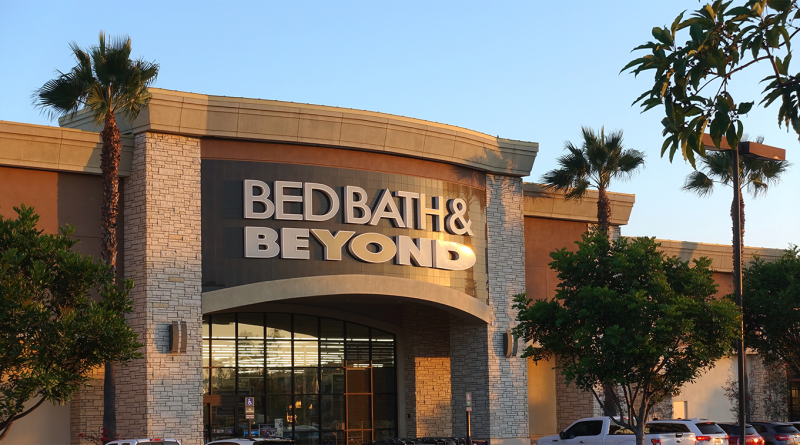
Bed Bath & Beyond relaunch signals new era in retail transformation
Subscribe to our free newsletter today to keep up to date with the latest business news.
In 2023, Bed Bath & Beyond shuttered the last of its once-sprawling store network, ending a decades-long run as a go-to destination for bedding, kitchenware and home essentials. The bankruptcy marked a dramatic fall for one of America’s most recognizable retail brands. Just months later, a new chapter is beginning under the leadership of Marcus Lemonis.
Appointed as chief executive while retaining his role as executive chairman, Lemonis has outlined an ambitious vision to rebuild Bed Bath & Beyond. Rather than replicating its past, he is positioning the brand for a future shaped by digital platforms, smart services and selective brick-and-mortar expansion. The relaunch is not merely about reopening stores but about redefining what a modern retail experience should look like in a post-pandemic economy.
Why California didn’t make the cut
Central to Lemonis’s relaunch plan is a controlled reentry into physical retail. Bed Bath & Beyond is preparing to open up to 300 stores across the United States. However, none of them will be located in California. This decision has drawn significant attention, particularly as California once hosted dozens of the company’s most profitable locations.
In a letter to shareholders and during media appearances, Lemonis cited the state’s high operating costs, complex regulatory environment and weak enforcement on retail crime as primary factors behind the decision. While the exclusion of California may seem surprising, it reflects a disciplined, data-driven approach to expansion. The company appears focused on maximizing return on capital, particularly as it reintroduces itself to a consumer base that has shifted toward digital convenience and away from large-format retail.
This measured footprint strategy also reduces risk. By targeting regions with more favorable operating conditions and strong consumer demographics, Bed Bath & Beyond can avoid the financial overreach that contributed to its prior downfall. The focus is now on profitable growth, not scale for its own sake.
From coupons to licks the digital evolution of Bed Bath & Beyond
While store openings signal a revival, the core of Bed Bath & Beyond’s relaunch lies in its digital-first strategy. Lemonis has emphasized the importance of a fully integrated omnichannel model. This means merging in-store shopping with e-commerce, AI-powered personalization and a growing array of services.
This marks a sharp departure from the company’s legacy approach, which leaned heavily on physical stores and discount-driven marketing. The familiar blue 20 percent off coupons that once flooded American mailboxes have now been replaced with personalized online offers, flexible financing options and service bundles.
Under the umbrella of Beyond Inc., which also owns Overstock and buybuy Baby, Bed Bath & Beyond is tapping into existing digital infrastructure to drive customer engagement. Lemonis has outlined plans to incorporate artificial intelligence into the customer journey, using data to help users navigate key life stages such as student housing, rental moves or homeownership.
New revenue streams will play a critical role in this transformation. In addition to selling physical goods, the company plans to offer warranties, insurance products and financial services such as buy now, pay later options. These higher-margin categories not only diversify the business but also position Bed Bath & Beyond as a holistic partner in homeownership, rather than simply a retailer of household products.
The company also holds investments in blockchain technology, including tZERO and GrainChain. These digital assets could support long-term capabilities such as supply chain transparency and secure payment processing.
Building a retail ecosystem beyond the checkout
To accelerate growth and rebuild market presence, Bed Bath & Beyond is also pursuing strategic acquisitions. In September, it finalized a $10 million acquisition of Kirkland’s Home, a home décor retailer. Beyond acquiring the brand name and digital assets, Bed Bath and Beyond plans to convert existing Kirkland’s locations into Bed Bath & Beyond Home stores.
This move is expected to generate approximately $350 million in incremental revenue. It is part of a broader strategy to re-establish physical retail through smart brand extensions. Kirkland’s product mix and customer base align closely with Bed Bath & Beyond’s target demographics, making the integration relatively seamless.
Looking ahead, Lemonis has indicated that more acquisitions are likely in 2024. He has signaled an interest in closing category gaps, building synergies across consumer services and expanding the brand’s role across multiple customer touchpoints.
The broader goal is to create a connected retail ecosystem that supports recurring customer relationships. Shoppers may purchase furniture on one platform, insure it through another and finance it using a third service. All of these would sit under the Bed Bath & Beyond umbrella, turning one-time transactions into long-term value exchanges.
Can Lemonis deliver on the vision
Marcus Lemonis is no stranger to high-stakes business turnarounds. Known for his television roles on The Profit and The Fixer, he brings an operationally focused leadership style and a reputation for direct, execution-heavy strategies. But relaunching one of the most recognizable retail brands in America will test more than his media instincts.
The U.S. retail sector remains volatile. Profit margins are thin, inflationary pressures persist and e-commerce has fundamentally reshaped consumer expectations. Dominant players such as Amazon, Walmart and Target continue to squeeze mid-tier retailers on both price and speed.
To thrive in this environment, Bed Bath & Beyond must offer more than nostalgic brand recognition. Its value proposition must be clear, modern and differentiated. The early signs of this pivot, including its focus on integrated services, smart physical expansion and use of data, suggest a promising trajectory.
Yet significant hurdles remain. Executing a seamless omnichannel experience requires more than just technology. It demands internal alignment, logistical coordination and exceptional customer service. Acquiring new brands and folding them into a cohesive consumer experience also carries inherent risks, particularly in a market where consumer trust can be hard to regain.
What is clear is that the relaunch is not a cosmetic exercise. It is a structural reinvention of the business model. Bed Bath & Beyond is positioning itself less as a retail chain and more as a platform for home solutions. Under Lemonis’s leadership, the company is writing a new playbook, one that could serve as a case study for the future of retail reinvention.
Sources: